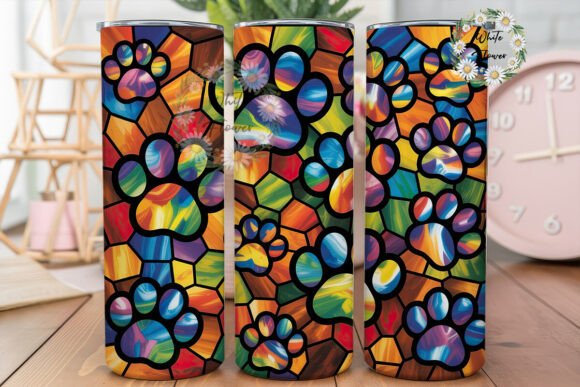
Stained Glass Paw Prints 20oz Tumbler
As a designer who has spent years reviewing digital assets for real-world embroidery projects, I often find myself skeptical of graphics that claim to be "ready to stitch" without much context. When I first encountered the Stained Glass Paw Prints 20oz Tumbler, my initial reaction was one of visual intrigue rather than immediate technical approval. The concept is undeniably charming: the intricate, lead-line aesthetic of stained glass combined with the universally loved motif of paw prints creates a piece that feels both artistic and sentimental. However, in the world of machine embroidery, a pretty image on a screen does not always translate to a clean finish on fabric.
This review is not about simply listing features; it is about evaluating how this specific design performs when moved from a digital preview to a tangible product. Whether you are an Etsy seller looking to expand your catalog or a hobbyist crafting a personalized gift, understanding the practical limitations and strengths of a Tumbler Wrap graphic is crucial before you commit to production.
The Visual Personality and First Impression
The mood created by the Stained Glass Paw Prints 20oz Tumbler is distinctively warm and nostalgic. Unlike standard fill stitches that can sometimes look blocky or flat, the stained glass style suggests a level of detail that implies depth. It evokes the feeling of a custom window in a cozy home, making it an excellent candidate for items intended to bring comfort or joy. The layout is designed to wrap around a cylindrical surface, which immediately signals its primary use case: tumblers, water bottles, and perhaps large tote bags.
From a purely aesthetic standpoint, the design offers high visual appeal. The contrast between the simulated lead lines and the colored "glass" panes allows for creative thread color choices. You aren't just stitching a shape; you are creating a mosaic effect. This makes the finished product feel more premium than a simple applique or a basic monogram. For a small business owner, this distinction is vital because it directly impacts the perceived value of the item. A customer paying a premium for a handmade tumbler expects a level of sophistication that this design delivers.
Real-World Application: From Screen to Stitch
To truly understand the utility of this design, let's imagine a specific scenario. You are preparing for the upcoming holiday season and want to create a line of custom embroidered aprons and kitchen towels for local boutique clients. The goal is to offer something unique that stands out against the typical floral or geometric patterns flooding the market. You decide to test the Stained Glass Paw Prints 20oz Tumbler on a heavy cotton canvas apron.
Here is where the practical judgment comes into play. The description notes that you will need to size the design to 9.3 inches by 8.2 inches using image editing software. This is a critical step. If you simply load the file into your embroidery software without adjusting the dimensions to fit your specific hoop or garment area, the result could be distorted. The design comes in two variations: straight and tapered. For a curved surface like a tumbler, the tapered version is likely the superior choice to prevent bunching at the edges. However, if you are applying this to a flat surface like a pillow cover or a tote bag, the straight version might provide better symmetry.
One major consideration for this design is the fact that it is not seamless. In the world of wrapping designs, a seamless pattern allows the image to repeat infinitely around a cylinder without visible breaks. Since this design is a single continuous image, the seam where the start and end points meet will be visible. On a tumbler, this means you must position the design carefully so that the join occurs on the back side of the bottle, hidden from view. If you are embroidering this onto a flat item like a sweatshirt, the non-seamless nature is less of a concern, but the aspect ratio must still be respected to avoid stretching the "stained glass" panels too thin.
Technical Challenges and Fabric Considerations
While the visual potential is high, there are several areas where this design requires careful handling. The resolution is listed as 300 DPI, which is excellent for printing, but for embroidery, we are concerned with stitch density and detail clarity. Stained glass designs rely heavily on fine lines to define the "lead." If your machine has difficulty holding tension on these fine details, or if you are using a lower quality thread, the intricate lines may disappear into the background fabric.
I would advise extreme caution when using this design on textured fabrics or stretchy materials. The complex geometry of the stained glass pattern can easily distort on a knit sweater or a loose-weave linen, causing the "glass" panes to warp. For best results, stick to stable, tightly woven fabrics like denim, heavy cotton, or twill. Additionally, the design is free of watermarks, which is great for commercial use, but you must ensure you have the correct licensing to sell finished products. Always verify the terms before offering these as part of your shop inventory.
Another potential pitfall is the hoop size. The specified dimensions of 9.3 x 8.2 inches are quite large for a standard 4x4 hoop. You will likely need a larger hoop, such as an 5x7 or even 6x10, depending on your machine. If you attempt to force this into a smaller hoop by resizing drastically, you risk losing the delicate definition of the paw print outlines. Conversely, if you do not resize it correctly for a larger hoop, the design might appear too sparse on a small item.
Impact on Brand and Customer Trust
In the competitive landscape of Etsy and craft fairs, the quality of your embroidery speaks volumes about your brand. A poorly executed design can make a professional-looking product appear amateurish. The Stained Glass Paw Prints 20oz Tumbler has the potential to elevate a project significantly because of its unique style. Customers are drawn to designs that tell a story or evoke a specific atmosphere. The combination of the stained glass motif with paw prints suggests a love for pets and art, appealing to a demographic that values thoughtful, handcrafted gifts.
However, the success of this design relies entirely on execution. If the thread colors clash with the fabric, or if the stitch density is too high causing puckering, the customer trust built by the beautiful concept will crumble. To maintain professionalism, I recommend testing the design on scrap fabric first. Check the thread color contrast in different lighting conditions. Sometimes, a design that looks vibrant on a computer screen appears dull under natural light due to the texture of the thread.
Practical Designer Notes for Success
If you are ready to incorporate this embroidery file into your workflow, here are some essential steps to ensure a flawless outcome:
- Test Before You Sell: Never run a new design directly on a final product. Use a scrap piece of the same fabric type to check for tension issues and detail loss.
- Review Stitch Density: Look closely at the satin stitches used for the lead lines. If they are too dense, they may crowd each other; if too sparse, they may look weak. Adjust the settings in your digitizing software if necessary.
- Check Stabilizer Usage: Because this design covers a relatively large area (9.3 x 8.2 inches), adequate stabilizer is non-negotiable. Use a cut-away stabilizer for stability, especially on items that will be washed frequently, like aprons or baby clothes.
- Mockup Verification: Create a black and white mockup to see how the design reads without color. This helps identify if the shapes are distinct enough to be recognized even if the thread colors blend together.
- Licensing Confirmation: Double-check the license agreement. While the file is free of watermarks, ensure you have the right to sell finished goods made with this design, particularly if you plan to mass-produce them.
The Stained Glass Paw Prints 20oz Tumbler is a versatile asset for any creative entrepreneur. It bridges the gap between digital art and tactile craft, offering a sophisticated look that fits well in nurseries, pet-themed boutiques, or holiday collections. By respecting its dimensions, understanding its non-seamless nature, and paying close attention to fabric selection, you can turn this graphic into a standout product that delights customers and strengthens your brand reputation.