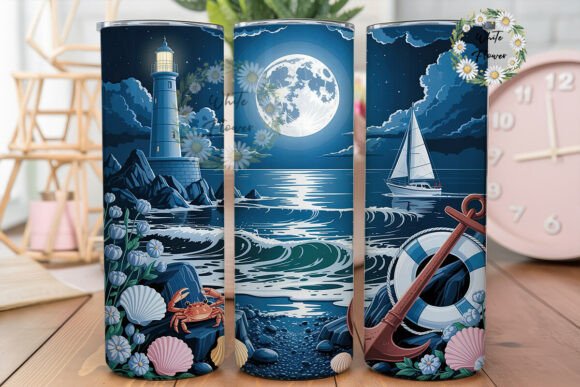
Moonlit Ocean Lighthouse Scene Tumbler Review
As an embroidery designer who has spent years testing digital assets for real-world production, I approach every new download with a mix of excitement and skepticism. There is a distinct difference between a design that looks beautiful on a screen and one that actually holds up under the needle. Today, I am putting Moonlit Ocean Lighthouse Scene Tumbler through its paces to see if it deserves a spot in my workflow for client projects and handmade merchandise.
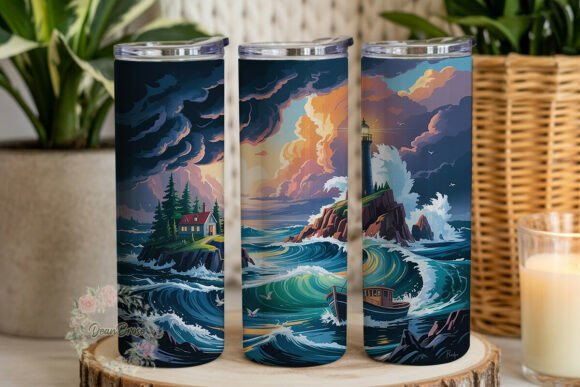
The first thing you notice about this piece is the mood. It isn't just a generic graphic; it evokes a specific atmosphere of calm and coastal nostalgia. When I opened the file, the composition immediately suggested a narrative. The lighthouse stands as a beacon against a darkened sky, promising safety and warmth. For a small business owner or an Etsy seller looking to create a cohesive collection, this visual personality is gold. It naturally belongs in projects related to home decor, nautical themes, or sentimental gifts. However, before we can talk about selling finished products, we must address the technical reality of how this design translates from a digital image to a stitched textile.
Real-World Application: From Screen to Stitch
I recently considered using Moonlit Ocean Lighthouse Scene Tumbler for a custom order involving a high-quality kitchen towel for a client who runs a boutique bakery. The goal was to create a personalized gift that felt artisanal and professional. My initial thought was that the large dimensions required—specifically the 9.3" x 8.2" sizing mentioned in the product details—would be perfect for a standard tea towel or even a large apron panel. But the devil is always in the details when it comes to machine embroidery design.
The description notes that the design comes as one file for straight stitching and another for tapered applications. This is a crucial distinction. If you are planning to use this on a curved surface like a cap or a rounded tumbler, the "tapered" file becomes your primary asset. However, I found myself pausing to consider the fabric texture. Embroidery relies heavily on the interaction between thread tension and fabric weave. On a smooth cotton towel, the lines would likely pop with clarity. On a textured linen or a heavy canvas tote bag, the fine details might get lost or cause puckering if the stabilizer isn't perfectly matched to the weight of the material.
One of the most practical aspects of this review is understanding where this design shines versus where it struggles. For a holiday gift, such as a Christmas ornament or a nursery pillow cover, the lighting contrast in the scene works beautifully. The dark background allows lighter stitch colors to stand out, creating a sense of depth that flat graphics often lack. But imagine trying to stitch this onto a dark-colored sweatshirt without proper underlay. The result could be muddy, losing the crispness of the lighthouse beam. This is why I always advise testing on scrap fabric first. You need to verify that the thread colors chosen will provide enough contrast against your specific fabric choice.
Navigating Technical Constraints and Fabric Choices
While the artistic vision is strong, the technical limitations cannot be ignored. The prompt explicitly states that the design is not seamless. This is a vital piece of information for anyone creating wrap-around items or repeating patterns. If you are designing a set of matching mugs or a continuous border for a blanket, you cannot simply tile this file without seeing obvious breaks in the pattern. For a standalone project, like a single patch or a centered design on a baby onesie, this limitation is irrelevant. But for commercial embroidery projects aiming for mass production, it requires careful planning.
I also had to scrutinize the resolution. The product lists a 300 DPI resolution, which is excellent for printing, but does it translate well to digitizing? When I simulated the stitch density in my head, I worried about the intricate corners of the lighthouse structure. Dense stitch areas on a design this size can lead to thread breakage or excessive bulk, especially if the user attempts to stitch it too quickly. If the design includes satin stitches for the outline, they must be balanced correctly to prevent the fabric from pulling inward. Without knowing the exact stitch count or machine compatibility, I recommend checking these parameters before committing to a large run.
There are also specific scenarios where caution is advised. Using this on stretchy fabrics like jersey knit for t-shirts requires a heavy-duty stabilizer to prevent distortion. Similarly, thin fabrics might tear under the tension of the needles if the fill stitch coverage is too heavy. For decorative accents on a quilt or a wall hanging, the design is likely safe, but for products that need frequent washing, such as daily-use aprons or children's clothing, the durability of the stitches becomes paramount. A rushed test wash on a sample piece can reveal potential issues before a customer ever receives their order.
Visual Appeal and Brand Consistency
From a branding perspective, Moonlit Ocean Lighthouse Scene Tumbler offers a sophisticated look that elevates a simple product. When a customer sees a well-executed embroidery design, it signals quality and attention to detail. This design, with its moody aesthetic, fits perfectly into the "handmade product" niche where buyers are willing to pay a premium for unique, story-driven items. It creates a sense of trust and professionalism that generic clipart simply cannot achieve.
However, the visual impact depends entirely on execution. If the thread selection clashes with the intended mood, the entire effect is ruined. I suggest using variegated threads for the ocean waves to add movement, while keeping the lighthouse itself in solid, bright tones to represent the light. Comparing light and dark fabric backgrounds in a mockup is essential here. On a white background, the dark sky might feel heavy, whereas on navy blue, the design might blend in too much. Finding that sweet spot ensures the finished product catches the eye without overwhelming the wearer or the room.
For digital product sellers, this design serves as a powerful asset for printable mockups. Showing a customer a high-resolution preview of how the lighthouse looks on a tumbler or a tote bag helps them visualize the final result. It bridges the gap between a digital file and a tangible object, increasing buyer engagement and reducing return rates caused by unrealistic expectations.
Practical Designer Notes for Success
If you decide to incorporate this into your craft business or personal projects, there are several non-negotiable steps to ensure success. First, confirm the licensing terms. Just because a file is free of watermarks does not automatically grant you the right to sell finished items commercially. Always check the specific license agreement before listing any goods on Etsy or at a craft fair.
Second, inspect the small details. Zoom in on the original file to ensure there are no jagged edges or missing pixels that could translate into broken stitches. Third, review the stitch density. If the design feels too dense, consider simplifying the fill areas or adjusting the thread colors to reduce the number of layers needed. Fourth, use proper stabilizer. For a design of this size, a cut-away stabilizer is often necessary to maintain the shape of the fabric over time, especially for items like hats or caps that undergo stress.
Finally, test the design in black and white mockups. This removes the distraction of color and forces you to focus on the composition and the balance of light and dark areas. Does the lighthouse stand out? Is the negative space effective? These questions are critical for ensuring the design works across different mediums.
In conclusion, Moonlit Ocean Lighthouse Scene Tumbler is a compelling choice for designers who value atmospheric storytelling in their work. It brings a touch of elegance and tranquility to any project, from baby embroidery to commercial embroidery. While it requires careful handling regarding seamlessness and fabric selection, the reward is a finished product that feels truly special. By following these practical guidelines, you can transform a digital file into a cherished keepsake that customers will love.